· Tim Kleier with Claude (Anthropic) · Operations
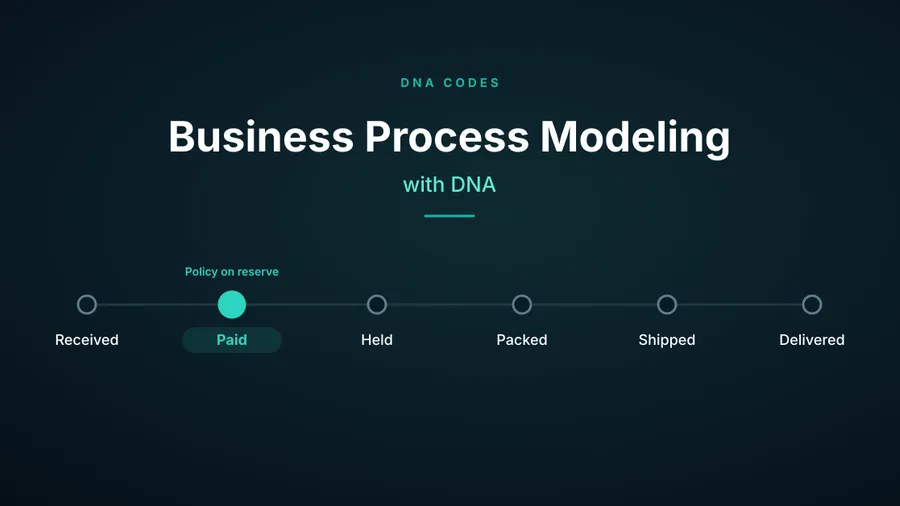
Business Process Modeling with DNA
Business process modeling with DNA writes a workflow of states, operations, and policies. Notation leaves it in a diagram. Management leaves it in slides.

Business process modeling with DNA writes a workflow of states, operations, and policies. Notation leaves it in a diagram. Management leaves it in slides.
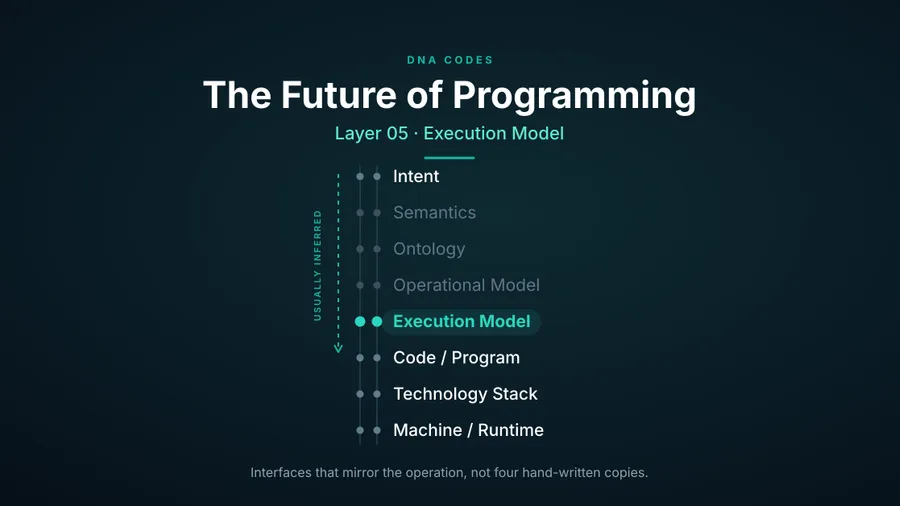
The Execution Model is where operational work becomes usable, with composable interfaces that faithfully reflect the underlying operational model.
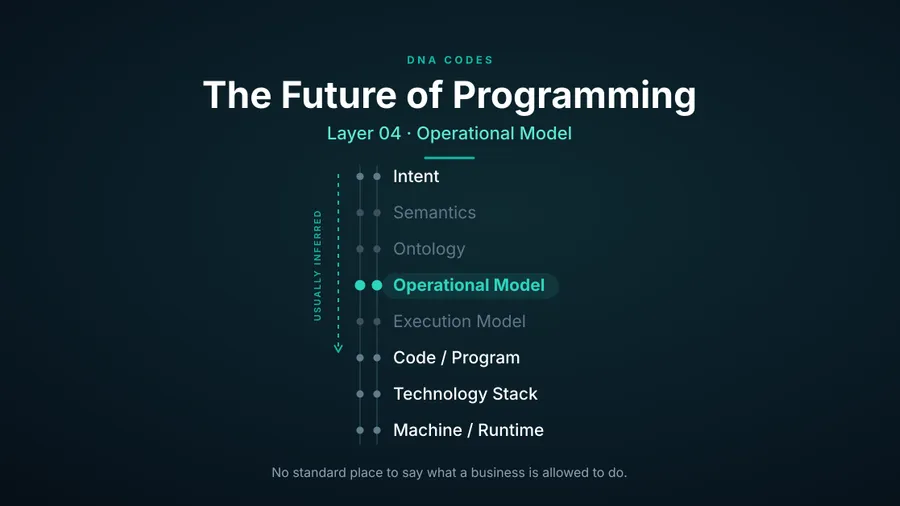
Biz Ops is often a function and/or team in organizations that captures the key processes of a company. The operational model formalizes business operations, and puts it in context: after the ontology, and before execution.
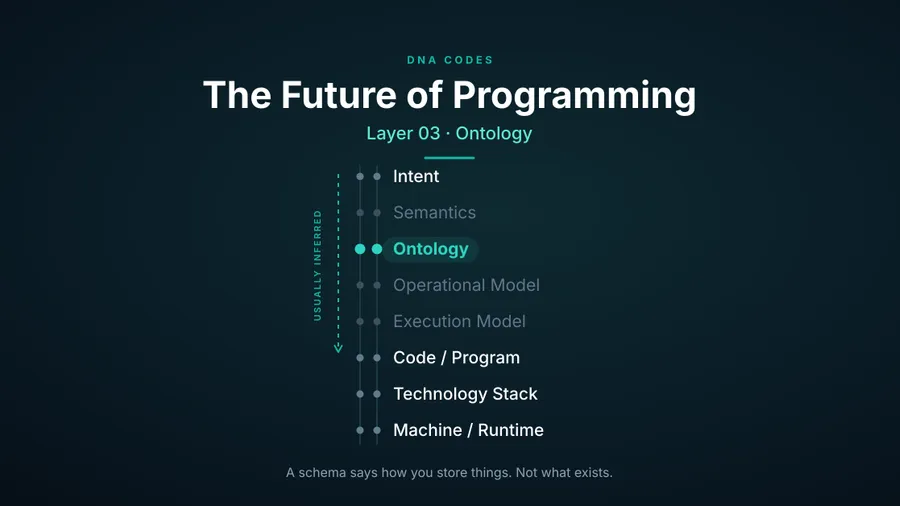
A database schema tells you how your business stores things. An ontology tells you what your business believes exists. Most teams have only ever written down schemas, and the missing formal ontology unintentionally causes an existential crisis.
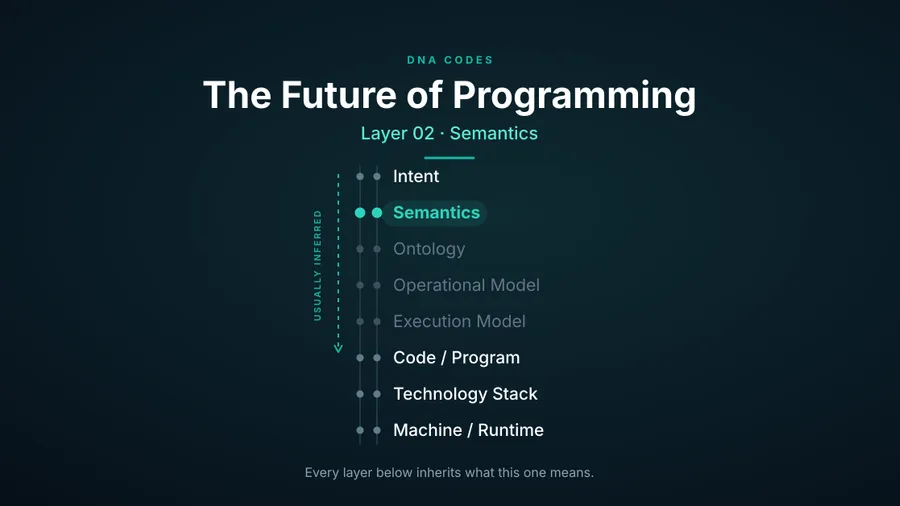
Every layer beneath meaning inherits it: the ontology, the operations, the endpoints, the code. Get one word wrong and they are all wrong in the same direction.
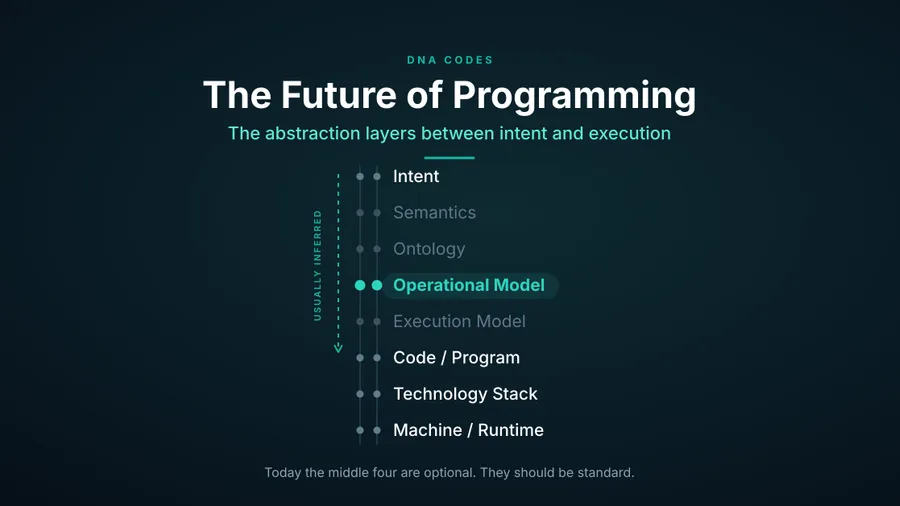
Today an LLM leaps straight from a prompt to code, deciding everything in between and writing none of it down. The next era of software engineering fills that gap with real abstraction layers: semantics, ontology, operational model, and execution model. Every handoff checkable, nothing guessed.