· Tim Kleier with Claude (Anthropic) · Engineering · 3 min read
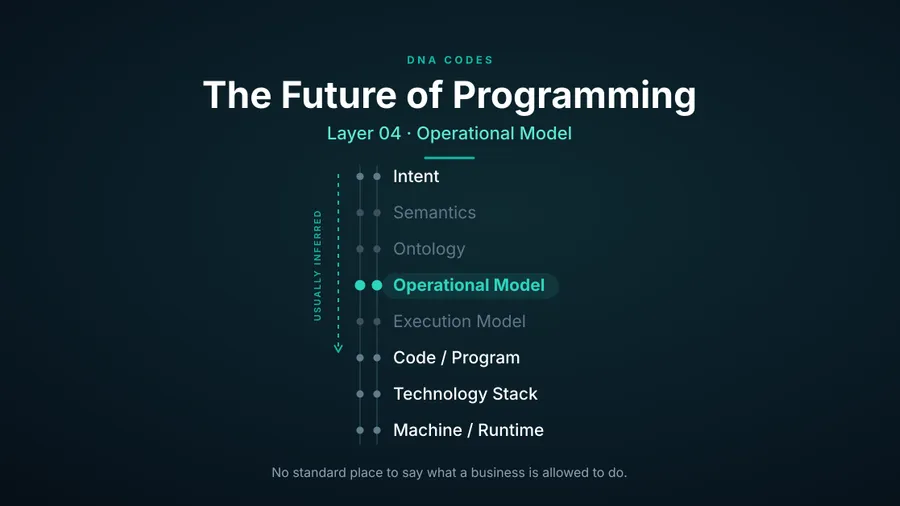
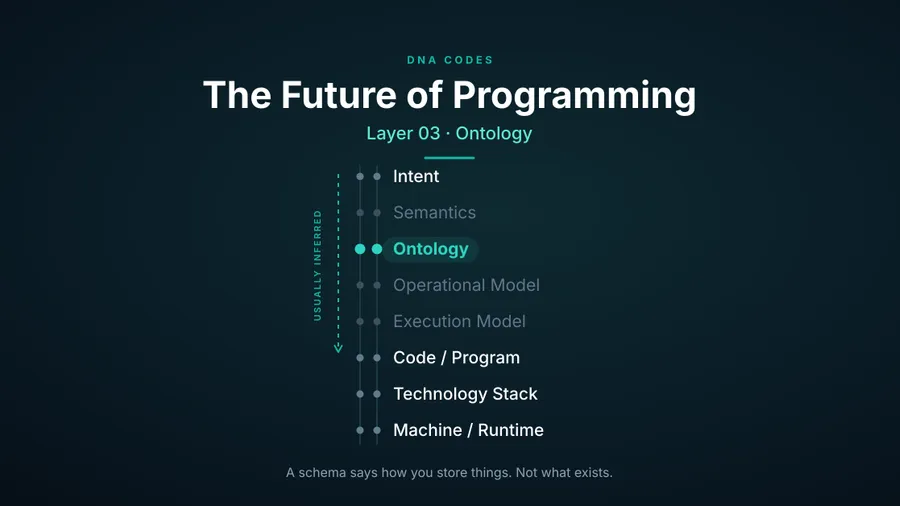
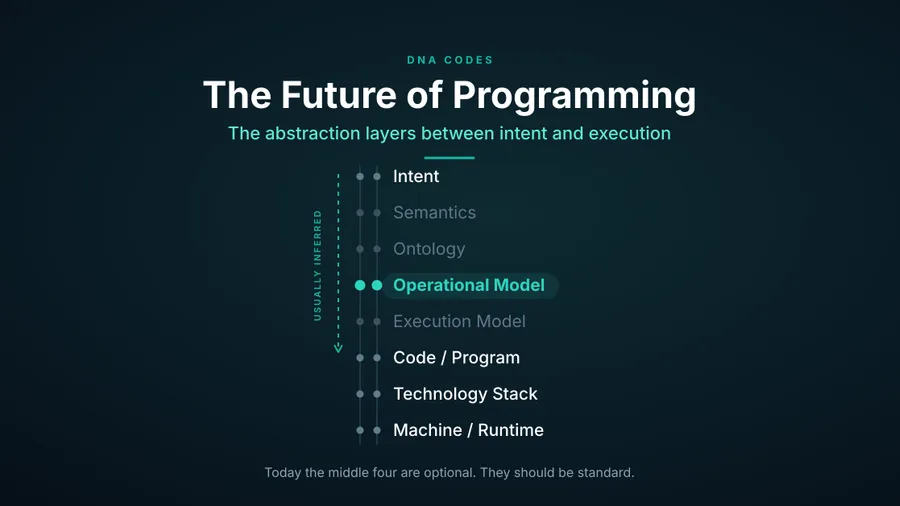
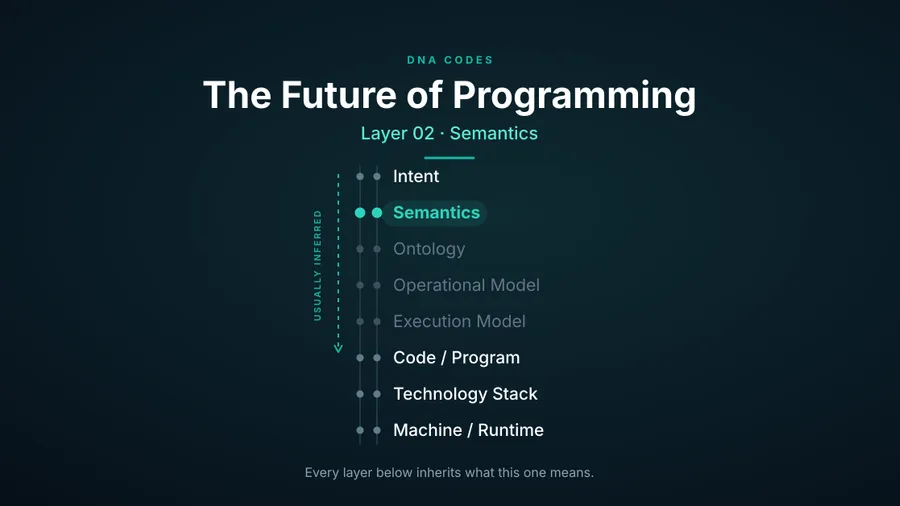
The Future of Programming · Layer 05: Execution Model
The Execution Model: A Mirror of Business Operations
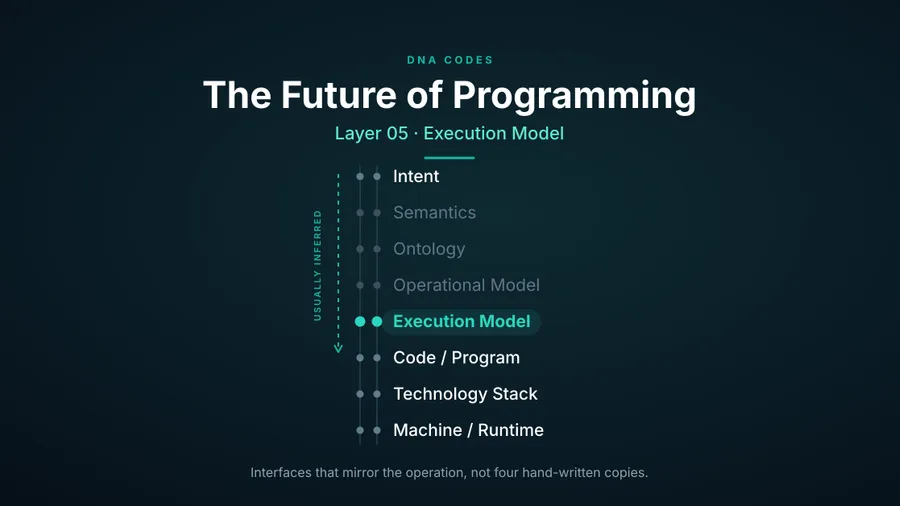
The Execution Model is where operational work becomes usable, with composable interfaces that faithfully reflect the underlying operational model.
Years ago I worked with an architect who would not let “CRUD” into a design review. No “Create Invoice” button. No “Update Loan” endpoint. No InvoiceCreated event if what we meant was Issued. Every UI component, every API endpoint, every pub/sub message had to use business nouns and verbs: “Issue Invoice”, “Close Loan”, “Escalate Claim”. He was not being pedantic about naming. He was keeping the interface vocabulary identical to the work the business already had words for.
That discipline made our interfaces clean. More than that, it opened the door for a near-perfect mirror between the operational model and the execution model: the same actor, action, and resource on both sides of the glass.
The Execution Layer
The Execution Model is where operational work becomes usable, with composable interfaces that faithfully reflect the underlying operational model. Its construct is the Interface: a button, a form, a REST endpoint, a workflow step, an MCP tool. Each interface runs an operation. None of them should redefine it.
If the mirror is faithful, every surface agrees on preconditions, effects, and errors because they read from one operation. If it is not, you do not have an Execution Model. You have four interfaces that happen to share a name, often dressed in CRUD because that was the template in the scaffold.
Interfaces for Operations
Agent-Native puts the action at the center: define a capability once, and the agent, UI, HTTP clients, and integrations all call the same code. That is the right paradigm for Execution. Business operations need more than a bare action (actor, resource, conditions, workflows), but agent-native architecture is how interfaces should attach. The operation is what they attach to.
The same Pay Invoice usually appears as more than one interface:
Operation
Customer → Pay → Invoice
| Operation | Interface |
|---|---|
| Pay Invoice | Button |
| Pay Invoice | POST /invoices/:id/pay |
| Pay Invoice | 3Pay Invoice Workflow step |
| Pay Invoice | pay_invoice() |
Written by hand, those four drift. Projected from one operation, they stay one contract in four idioms.
Interfaces for Workflows
Operations compose. A customer submitting an order is not one interface. It is a workflow: validate on the frontend, submit through an API that validates again, create the order, send a confirmation email, and route to the confirmation page. Each step is still an operation with a noun and a verb. The actor, often the system, sits beside it.
Workflow
Submit Order
OrderValidate
Frontend validation
OrderSubmit
API validation
OrderCreate
Triggers
ConfirmationSend
Background job
ConfirmationShow
Return to frontend, confirmation page
Operational Mirror
Agents make a cracked operational mirror expensive. When a tool says amount is optional and the endpoint requires it, the agent omits the field, gets a 400, and the failure gets logged as a hallucination. It was not. The model called what it was told exists.
OpenAPI, GraphQL SDL, protobuf, AsyncAPI, JSON Schema, and now MCP already keep wire formats aligned. They project from paths and payloads. They do not carry the operation’s preconditions, effects, and permissions into every face that exposes it. Multi-interface projection is accepted. The missing move is projecting from the business operation.
The Execution Abstraction Layer
An abstraction layer is only real if you can say what it receives and what it produces.
| Direction | Handoff | What happens | |
|---|---|---|---|
| In | from the Operational Model | Projection | The operation arrives intact; Execution expresses it in each interface’s idiom. |
| Out | to Code | Generation | Once the interface contract is singular, stubs, clients, and validators follow. |
That architect was enforcing the mirror by hand: every button, endpoint, and event had to speak the same nouns and verbs as the business. The Execution Model is that discipline made structural. When interfaces project from the operation, CRUD is no longer necessary. Instead, execution is directly informed by the actual business operations.
We’re building DNA Codes to make the middle of the ladder real: an operation declared once, and the interfaces below read from that declaration. If this is how you’re thinking about the problem too, join the waitlist.
Written by Tim Kleier with Claude (Anthropic). The argument, the claims and the last word are Tim Kleier's; the drafting and the editing were done together.